
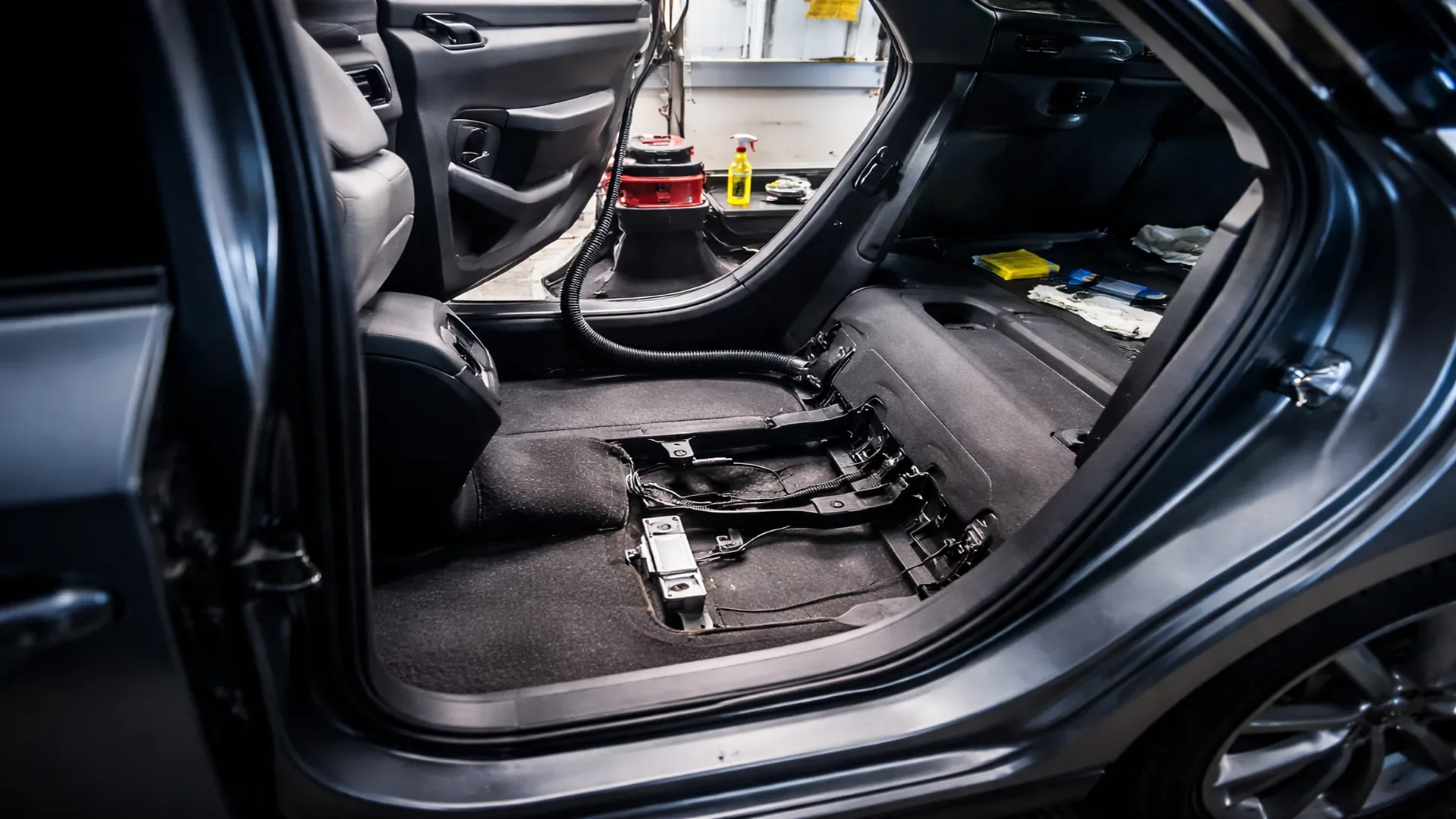
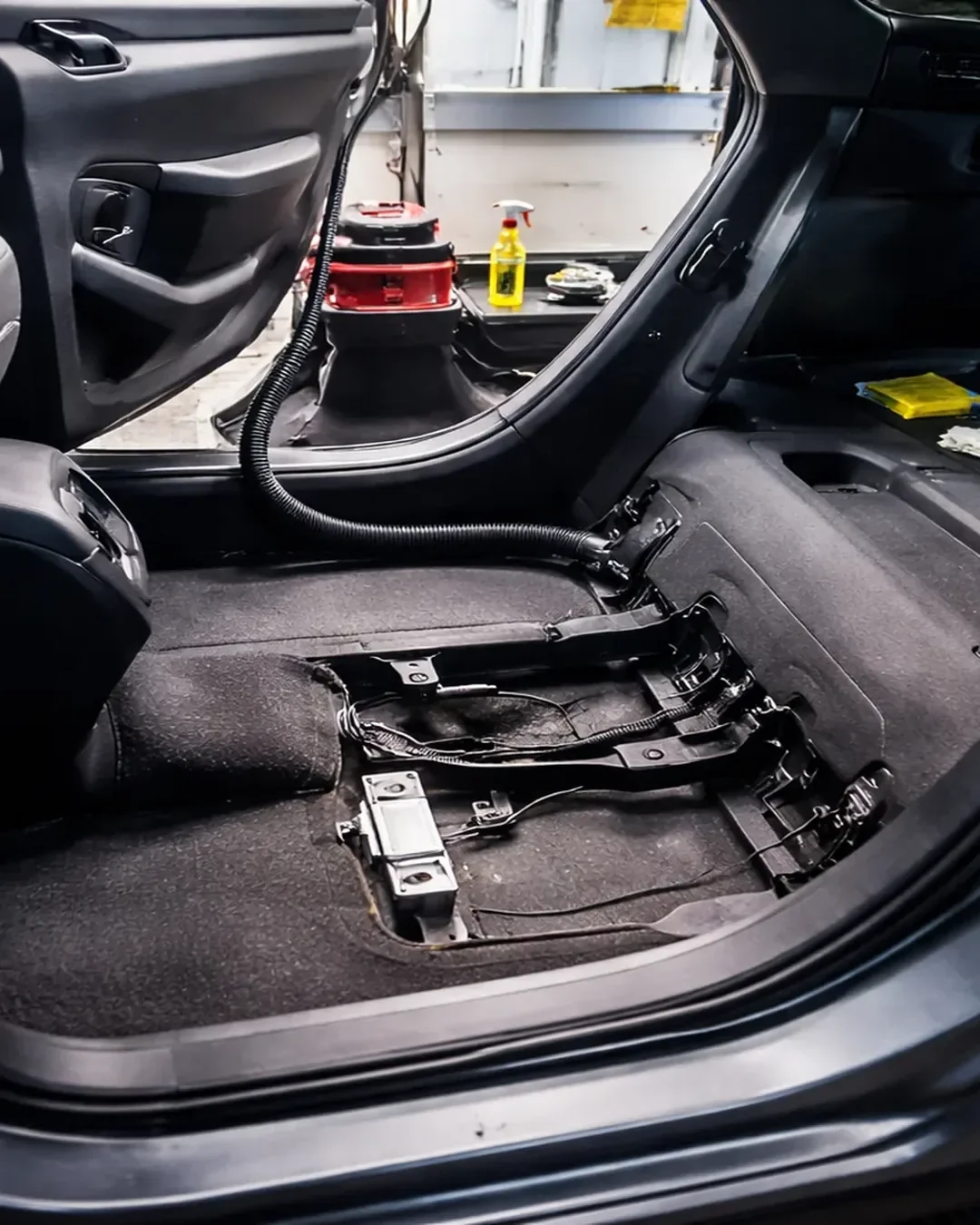
Signature Interior Restoration with Seat Removal in Edmonton
Signature Interior Restoration is an advanced interior restoration service for vehicles where affected areas cannot be reliably inspected or accessed with the interior fully assembled.
When the approved service scope requires additional access, we coordinate the professional removal and reinstallation of applicable seats and interior components. Where required by the approved scope, seat removal and applicable mechanical disassembly are performed by a qualified automotive technician through a third-party AMVIC-licensed automotive repair business. Cotton Soft Detailing does not perform the regulated mechanical removal or reinstallation.
This is not a maintenance detail and is not intended for lightly soiled vehicles. Service scope and pricing are condition-based, inspection is required prior to service, and results vary depending on the type and severity of contamination, material condition and accessibility.
When Professional Interior Disassembly May Be Required
Some interior conditions cannot be properly evaluated or addressed while seats and other components remain installed. Professional disassembly may be recommended when inspection indicates that affected areas extend into concealed or physically inaccessible locations.
Examples may include:
Contamination or liquid migration beneath installed seating
Affected carpet or underlay that cannot be reliably accessed while installed
Contamination surrounding seat mounting points, wiring or floor-level components
Persistent odour where the suspected source extends beneath accessible interior surfaces
Evidence that contamination has migrated beyond the visibly affected area
Conditions requiring inspection of concealed floor areas before an appropriate restoration scope can be established
Seat removal or additional disassembly is not automatically required for every heavily soiled vehicle. The level of access is determined by the vehicle’s condition, affected materials and findings identified during inspection.
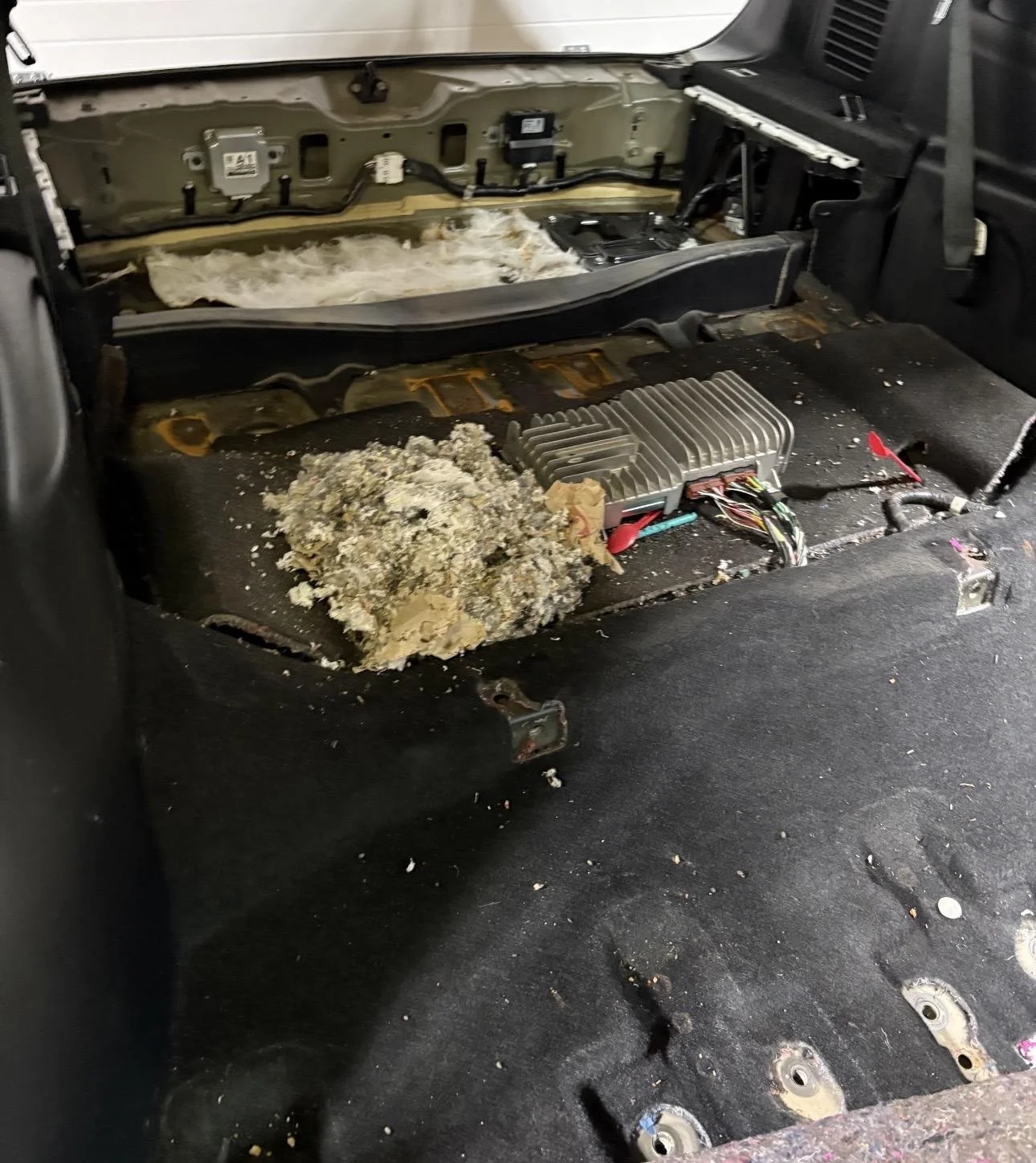
“Just detailed”. No one knew this mouse nest was here until we removed the seats.
Why Mechanical Access Matters
Vehicle interiors contain overlapping materials, mounting points, wiring channels, carpet edges and other areas that may be partially or completely concealed when the interior is assembled. When contamination migrates into these locations, cleaning only the visible surfaces may leave part of the affected area inaccessible.
Professional disassembly can provide direct access to areas beneath and around installed components so their condition can be inspected before restoration cleaning proceeds.
This additional access may allow us to:
Identify the extent and migration path of contamination
Access floor areas, carpet edges and other concealed surfaces that would otherwise be obstructed
Evaluate affected carpet, underlay and surrounding materials more accurately
Improve access for controlled cleaning and drying where restoration is appropriate
Identify materials that may not be reliably restorable and should instead be considered for replacement
Document concealed conditions discovered during the service
Disassembly does not guarantee that every affected material can be restored. The appropriate treatment depends on the contamination involved, material condition, accessibility and findings identified after the area is exposed.
Who This Service Is For
Signature Interior Restoration is intended for vehicles where inspection indicates that the affected areas cannot be reliably evaluated, accessed or treated with the interior fully assembled.
This service may be appropriate when:
Contamination or liquid has migrated beneath installed seating or interior components
Carpet, underlay or floor-level areas require additional access for inspection or treatment
Persistent contamination or odour is suspected to originate from a concealed area
The extent of contamination cannot be reliably determined without additional access
Professional disassembly is required to complete the approved restoration scope
Who This Service Is Not For
Signature Interior Restoration is not intended for:
Lightly soiled or routinely maintained vehicles
Express or maintenance detailing
Customers seeking seat removal simply as an upgrade to a standard detail
Vehicles where the required areas can be properly addressed through Interior Restoration Cleaning without mechanical disassembly
Customers seeking a basic or budget cleaning package
Signature Interior Restoration is condition-based, not package-based. Inspection is required before service, and professional disassembly is recommended only when the vehicle’s condition and required access justify it.
How Signature Interior Restoration Works
Signature Interior Restoration follows a controlled, documented workflow designed around the vehicle’s approved restoration scope.
1. Inspection & Scope Assessment
The vehicle’s condition is reviewed to identify affected areas, accessibility limitations and whether professional disassembly is appropriate.
2. Service Authorization & Documentation
The proposed scope is documented and approved before work begins. The vehicle’s starting condition is recorded through our Master Service Form and supporting photo and video documentation.
3. Professional Disassembly
Where required by the approved scope, seat removal and applicable mechanical disassembly are performed by an AMVIC-licensed mechanic. Cotton Soft Detailing does not perform the regulated mechanical removal or reinstallation.
4. Concealed-Area Inspection
Once access is created, previously obstructed areas are inspected and documented. If additional contamination, damage or non-restorable materials are identified, the findings are communicated before work outside the authorized scope proceeds.
5. Restoration Cleaning
Accessible affected areas are treated using material- and contamination-specific chemistry and cleaning methods. Treatment is adapted according to the materials, condition and findings uncovered during the service.
6. Controlled Drying & Quality Control
Treated materials are allowed appropriate drying time and the completed restoration work is reviewed against the authorized scope.
7. Professional Reassembly & Final Release
Mechanical reinstallation is completed by a qualified automotive technician through the third-party AMVIC-licensed automotive repair business. Final condition documentation and quality-control records are completed before the vehicle is released.
Where required by the approved scope, seat removal and applicable mechanical disassembly are performed by a third-party AMVIC-licensed automotive technician. Cotton Soft Detailing does not perform the regulated mechanical removal or reinstallation.
Documentation Through Every Stage
Every Signature Interior Restoration service is supported by our Master Service Form, photo and video documentation, and a defined authorization process.
Because professional disassembly may expose conditions that could not be observed during the initial inspection, newly accessible areas are documented as the service progresses. If additional contamination, damaged materials or a change in restoration scope is identified, the findings are communicated and authorization is obtained before additional work proceeds.
Documentation follows the vehicle through initial inspection, disassembly, restoration cleaning, reassembly and final release, creating a clear record of the condition observed and work performed.
Request Signature Interior Restoration
If your vehicle may require professional disassembly to properly access affected interior areas, submit a service request with information about its current condition.
We will review the information provided and recommend the appropriate restoration scope. Signature Interior Restoration is recommended only when inspection indicates that additional mechanical access is appropriate.