
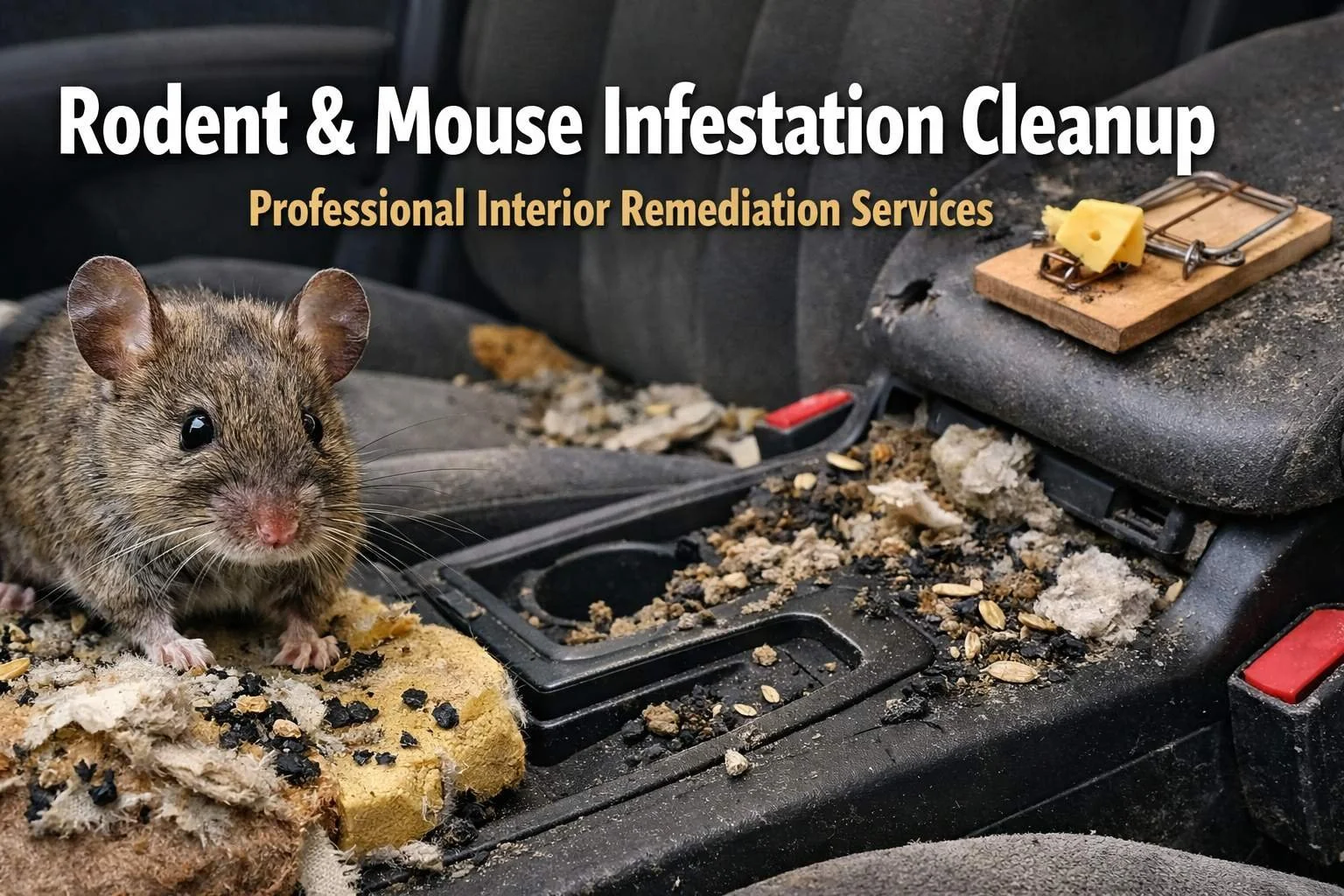
Mouse and Rodent Infestation Vehicle Remediation in Edmonton
Professional interior remediation for vehicles affected by mouse or rodent urine, droppings, nesting material and associated contamination.
Rodent contamination can extend beyond the areas where evidence is immediately visible. Nesting material, waste and contaminated debris may be present beneath interior components, within concealed areas or around the vehicle's HVAC system.
Our process begins by assessing the evidence present, suspected areas of activity and the extent to which affected materials can be accessed. The required remediation scope is then determined according to the vehicle's actual condition.
This is not a maintenance detail and is not intended for lightly soiled vehicles. Service scope and pricing are condition-based, inspection is required before the final scope is established, and results vary according to contamination severity, affected materials and accessibility.
Why Rodent Contamination Requires Specialized Remediation
Rodent activity inside a vehicle can involve more than the droppings or nesting material visible during an initial inspection. Mice and other rodents can move through concealed areas of the interior, allowing urine, feces, nesting debris and other contamination to become distributed beyond the obvious activity area.
Evidence may be found:
Beneath seats and interior trim
Along carpet edges and beneath accessible flooring materials
Within storage compartments and concealed cavities
Around wiring, mounting points and interior structures
Near cabin air filters, blower assemblies or other accessible HVAC components
Within porous materials affected by urine or other contamination
Because the visible evidence may represent only part of the affected area, the remediation scope is based on inspection and observed signs of rodent activity rather than simply cleaning the locations where droppings are initially found.
Where contamination is suspected in areas that cannot be reliably accessed with the vehicle assembled, professional disassembly may be recommended.
Assessing the Extent of Rodent Contamination
Rodent contamination does not always remain confined to one visible area. Inspection focuses on identifying evidence of activity and determining how far contamination may have extended through the vehicle.
Depending on the vehicle and reported history, we may assess for:
Droppings, urine staining and nesting material
Evidence of activity beneath or around installed interior components
Contamination affecting carpet, underlay or other porous materials
Entry points or pathways consistent with rodent movement
Odour associated with concealed contamination
Evidence of activity near accessible HVAC components
Materials that may require additional access before their condition can be determined
The amount of visible droppings alone does not determine the remediation scope. A vehicle with limited visible evidence may still require further investigation when other signs indicate activity in concealed areas.
If inspection indicates that additional access is necessary, the recommended scope is discussed before professional disassembly or work beyond the authorized service is performed.
When Rodent Contamination Extends Into Concealed Areas
Mice can travel through areas of a vehicle that cannot be fully inspected while the interior is assembled. When evidence suggests activity beneath installed components or within layered interior materials, surface cleaning alone may not provide sufficient access to evaluate the affected area.
Additional access may be recommended when there is evidence of:
Droppings, urine or nesting material beneath installed components
Contamination extending beneath carpet or into underlay
Persistent odour with no identifiable source in accessible areas
Rodent activity around concealed floor areas or interior cavities
Contamination that cannot be reliably evaluated from the installed surface
Where mechanical access is required, applicable disassembly and reassembly are performed by a qualified automotive technician through a third-party AMVIC-licensed automotive repair business. Once the area is accessible, the affected materials can be inspected and the appropriate remediation scope determined.
Some porous materials may not be suitable for restoration depending on the severity and duration of contamination. Where reliable remediation is not appropriate, material replacement may be recommended.
Rodent Activity Around the Vehicle HVAC System
Rodents may enter areas associated with the vehicle’s heating and ventilation system. Evidence can sometimes be found around the cabin air filter, blower assembly or other accessible HVAC components.
When the vehicle history or inspection indicates possible HVAC involvement, the assessment may include checking accessible areas for:
Droppings or nesting material
Contaminated cabin air filters
Debris around the blower assembly
Urine staining or other evidence of rodent activity
Odour originating from accessible HVAC areas
Evidence suggesting contamination extends beyond the areas that can be directly inspected
HVAC involvement is assessed according to the evidence present. Finding rodent contamination elsewhere in the vehicle does not automatically mean the entire ventilation system is contaminated.
Where affected components require mechanical removal for proper access, the applicable removal and reinstallation are performed by a qualified automotive technician through a third-party AMVIC-licensed automotive repair business.
Rodent Contamination in Porous Interior Materials
Rodent urine and other contamination can be absorbed into porous interior materials rather than remaining on the visible surface. Carpet, underlay, insulation, fabric and seat materials may therefore require individual assessment when evidence indicates direct exposure.
The appropriate response depends on factors such as:
Type and severity of contamination
Depth of absorption
Duration of exposure
Material construction and condition
Whether the affected area can be reliably accessed
Whether the material can be adequately treated and dried
Some affected materials may be suitable for controlled cleaning and remediation. Others may be too heavily contaminated, damaged or inaccessible to reliably restore.
When restoration is not appropriate, replacement of the affected material may be recommended rather than repeatedly treating a material that continues to retain contamination or its source.
Rodent Contamination Remediation
Once affected areas have been identified and the required access established, remediation focuses on removing rodent waste, nesting material and associated contamination from the approved service area.
Depending on the condition identified, the work may include:
Controlled removal of droppings, nesting material and contaminated debris
Cleaning of affected accessible surfaces
Treatment of urine or other biological contamination using appropriate products and procedures
Remediation of affected porous materials where restoration is appropriate
Cleaning of accessible areas associated with confirmed rodent activity
Controlled drying where moisture-based treatment is required
Reassessment of treated areas before reassembly or final release
The remediation process is adapted to the contamination and materials present. Cleaning methods appropriate for a hard, non-porous surface may not be appropriate for carpet, underlay, fabric or other absorbent materials.
The objective is to address the identified contamination and its source within the authorized scope rather than simply removing visible droppings or masking associated odour.
Documentation & Concealed Findings
Rodent infestations can reveal additional contamination once interior materials or components become accessible. Relevant findings are documented throughout the approved service.
If additional nesting material, waste, damaged materials or contamination is discovered outside the original scope, the findings are communicated before additional work is performed.
Photo and video documentation may also support insurance-related claims by providing a record of observed conditions, affected areas and work performed.
Insurance coverage and claim approval remain subject to the vehicle owner’s insurer or adjuster.
When Rodent Infestation Remediation Is Appropriate
Rodent infestation remediation is intended for vehicles with confirmed or suspected contamination from mice or other rodents.
This service may be appropriate when there is:
Rodent urine, droppings or nesting material inside the vehicle
Evidence of nesting beneath or around interior components
Contamination affecting carpet, underlay or other porous materials
Rodent-related odour with evidence suggesting a concealed source
Evidence of activity around accessible HVAC components
Suspected contamination extending beyond the immediately visible area
This service is not intended for lightly soiled vehicles, routine interior cleaning or maintenance detailing.
The remediation scope is condition-based and requires inspection before the final service scope is established. Pricing depends on the extent of contamination, required access, affected materials and work required.
Results vary according to contamination severity, duration, material condition, accessibility and whether affected materials can be reliably restored.
Service Time & Process Expectations
Rodent infestation remediation is condition-based, and service time depends on the extent of contamination, required access and affected materials.
Projects requiring professional disassembly, treatment of concealed areas, controlled drying or replacement of contaminated materials may require additional time.
An estimated scope and timeline are provided based on the information available before service. If additional contamination or damaged materials are discovered after access is established, the findings are documented and communicated before work proceeds beyond the authorized scope.
Completion dates are estimated rather than guaranteed because the full extent of a rodent infestation cannot always be determined while the vehicle is assembled.
Rodent & Mouse Infestation FAQs
I only found a few mouse droppings. Do I need remediation?
Not necessarily. A small amount of visible evidence does not by itself determine the required scope.
We consider where the evidence was found and whether there are other signs of activity or concealed contamination.
Do the seats need to be removed?
Not for every vehicle.
Professional disassembly is recommended only when additional access is needed to inspect or address suspected contamination beneath or around installed components.
Can mice contaminate the HVAC system?
They can enter areas associated with the heating and ventilation system.
When there is evidence of HVAC involvement, accessible areas such as the cabin air filter and blower area may be inspected for droppings, nesting material or other signs of activity.
What if mouse urine has soaked into the carpet or underlay?
Affected porous materials are assessed individually.
Some materials may be suitable for remediation, while heavily contaminated or damaged materials may require replacement.
Will cleaning remove the mouse smell?
Odour can indicate that a contamination source remains somewhere in the vehicle, but odour alone does not identify where that source is located.
The priority is identifying and addressing the source rather than simply masking the smell.
Can you find every area a mouse has been?
Not always. Vehicle interiors contain cavities and areas that may not be accessible even with an expanded service scope.
We assess the available evidence and recommend additional access when it is reasonably required.
What happens if you find more contamination after disassembly?
New findings are documented and communicated before additional work outside the authorized scope is performed.
This allows the service scope to be adjusted based on the vehicle's actual condition.
Can contaminated insulation, carpet or seat materials always be saved?
No. Restorability depends on the material, severity of contamination, duration of exposure and ability to reliably access and treat it.
Replacement may be recommended when reliable restoration is not appropriate.
Can insurance cover rodent contamination in a vehicle?
Coverage depends on the individual policy and insurer.
When a claim is involved, our service documentation and available photos or videos can help record the observed condition and work performed.
How do I request mouse infestation remediation in Edmonton?
Submit a quote request describing the evidence you've found, where it was located, any odour or HVAC concerns, and any previous cleaning or repairs.
Include photos where possible. We will review the information and recommend the appropriate next step.
Request Rodent & Mouse Infestation Remediation
If you have found mouse or rodent droppings, urine, nesting material, unusual odour or other evidence of activity inside your vehicle, submit a service request describing what you have found and where it was located.
Include photos where possible and identify any concerns involving concealed areas or the HVAC system.
We will review the information provided and recommend the appropriate next step based on the vehicle’s condition.
Final service scope and pricing are condition-based and determined through assessment and inspection.