
Urine Contamination in a 2025 Jeep Compass
When a heated seat is activated, heat penetrates deep into the seat foam where bodily fluids can become trapped. This heat reactivates contaminants, accelerates bacterial growth, and forces odor vapors back through the seat fabric — which is why urine odors often become stronger when seats warm up. Proper biohazard remediation requires deep saturation and controlled drying, not surface cleaning.
Medical Urine Contamination in a 2025 Jeep Compass: Edmonton Remediation Case Study
A medical emergency inside a vehicle can create an interior contamination problem that goes far beyond a visible stain.
In this case, a 2025 Jeep Compass used as a fleet vehicle was transporting an individual when they experienced a seizure and lost control of their bladder. The front passenger seat received the majority of the contamination.
The odour was noticed immediately. Over the following days, however, it became considerably stronger—particularly when the vehicle warmed up.
By the time Cotton Soft Detailing became involved, approximately 11 days had passed since the incident.
What initially appeared to be contamination of the passenger seat ultimately required professional seat removal, treatment of the seat fabric and cushioning, access to the carpet beneath the seat, extended drying and a multi-day remediation process.
The Vehicle and Contamination
Vehicle: 2025 Jeep Compass
Vehicle use: Fleet vehicle
Contamination: Human urine following a medical incident
Time before remediation: Approximately 11 days
Primary affected area: Front passenger seating area
Service duration: Approximately three days
The known contamination involved the front passenger seat fabric and cushioning, with the carpet beneath the seat also requiring attention.
Because urine is a liquid contamination, the visible surface of the seat could not be treated as the only area of concern. The construction of an automotive seat allows liquid to move through the outer fabric and into the cushioning beneath it.
The location of the incident also meant the area beneath the seat needed to be accessible for evaluation and cleaning.
Why the Seat Had to Come Out
Surface cleaning would have provided access to the upholstery but not to everything involved in this particular incident.
The electronic front passenger seat was therefore removed so the seat itself and the carpeted area beneath it could be properly accessed.
Because this involved an electronic vehicle seat, removal and reinstallation were performed by a qualified automotive technician through a third-party AMVIC-licensed automotive repair business.
The condition of the seat, wiring and surrounding area was documented, and the seat electronics were tested in connection with the removal and reinstallation process.
With the seat removed, Cotton Soft Detailing could work on the contamination without attempting to clean around an installed component.
The Seat Foam Was the Main Challenge
The passenger seat was not simply stained on its outer surface.
Urine had penetrated into the seat cushioning.
That changed the nature of the job considerably.
Automotive seat foam is thick and porous. Once liquid has entered it, treating only the outer fabric does not address material deeper within the seat.
The affected seat fabric and foam were therefore treated as part of the remediation process rather than receiving a conventional upholstery cleaning.
The carpeted area associated with the incident was also addressed while the passenger seat was removed.
Treatment Required Extended Contact Time
The affected seat materials underwent a controlled treatment process intended to reach beyond the outer upholstery.
During this stage, the seat was wrapped to help maintain the required moisture conditions while the treatment remained in contact with the affected material.
This portion of the work continued for approximately 24 hours.
That extended treatment period is one of the reasons this vehicle could not be approached like a conventional detailing appointment. The condition of the material—not a predetermined service time—determined how the work progressed.
Then Came the Hard Part: Drying the Seat
After treatment, the seat contained substantial moisture.
Returning a damp seat to the vehicle was not an acceptable endpoint.
Drying thick automotive cushioning can be considerably more difficult than drying the exposed surface of upholstery. Air moving across the outside of a seat does not necessarily produce adequate airflow through the internal foam.
Sections of the seat were therefore carefully opened enough to improve access, and forced-air blower nozzles were positioned to direct airflow deeper into the cushioning.
Additional fans supported evaporation around the seat.
The drying stage alone approached 48 hours.
This was a major part of the approximately three-day service.
Rather than setting a fixed completion time and returning the vehicle because the scheduled appointment had ended, drying continued according to the condition of the material.
The Rest of the Interior Was Also Addressed
This was a fleet vehicle, so the service was not limited to making the passenger seat look clean.
Areas associated with the contamination event and surrounding interior touchpoints were addressed as part of the approved scope.
Throughout the work, contaminated materials, tools and work areas were managed using controls intended to reduce transfer outside the affected work area.
Personal protective equipment and dedicated materials were used during the remediation process.
The goal was controlled handling of the known contamination while the affected seat and surrounding interior were being restored.
Reassessment Before Reassembly
Once treatment and drying were complete, the seat and affected areas were reassessed before the vehicle was put back together.
The previous version of this case study stated that a black-light inspection proved there was “no remaining biological residue.” That conclusion went beyond what a visual or ultraviolet inspection can establish.
UV inspection can be useful as an investigative aid in some circumstances, but it is not laboratory confirmation that a material is free of biological contamination.
For this project, quality control instead considered the condition of the treated materials, drying progress, the affected areas identified during the service and odour under conditions relevant to the original complaint.
The seat electronics were also tested in connection with reassembly.
The Vehicle Was Reassembled
After the remediation and drying stages were completed, the passenger seat was professionally reinstalled.
The mechanical portion of the work remained separate from Cotton Soft Detailing's cleaning and remediation scope.
The vehicle could then undergo final condition documentation before being returned to the customer.
Seven-Day Follow-Up
Our involvement did not end the moment the vehicle left.
A follow-up was completed approximately seven days after service.
The customer reported that the urine odour had not returned, including under the warmer conditions that had previously made the smell substantially more noticeable.
That follow-up is important to how we document the result.
Rather than claiming that every molecule of contamination had been eliminated or that a visual inspection proved sterility, we can report what was actually established:
The affected materials were accessed and treated, the seat underwent extended drying, the vehicle was reassembled, and the customer reported no recurrence of the urine odour at the seven-day follow-up.
A Three-Day Job From What Looked Like One Contaminated Seat
This case demonstrates why the visible size of a contamination event does not necessarily predict the required restoration scope.
The original incident primarily involved one passenger seat.
Addressing it properly required:
Assessment and documentation
Professional removal of an electronic passenger seat
Access to the carpet beneath the seat
Treatment of contaminated seat fabric and cushioning
Extended contact time
Nearly 48 hours of forced-air drying
Cleaning of associated interior areas
Reassessment before reassembly
Professional seat reinstallation
Electronic function checks
Final documentation
Post-service follow-up
What could easily have been approached as an upholstery stain instead became an approximately three-day interior remediation project because of where the liquid had travelled.
Documentation Throughout the Project
The customer received extensive photographic documentation of the project, including conditions before, during and after the work.
Service documentation was organized in a private digital folder so the customer could review the progression of the project.
For complex interior contamination, documentation is particularly valuable when concealed conditions become visible only after disassembly.
It creates a record of what was found rather than relying solely on the appearance of the finished vehicle.
What This Case Teaches About Urine Contamination in Vehicles
Not every urine incident requires this level of intervention.
A small amount affecting a readily accessible, non-porous surface is very different from liquid that has penetrated an upholstered seat and remained within porous material for days.
The appropriate scope depends on factors such as:
Amount of liquid involved
Location of the incident
Materials affected
Depth of absorption
Time since the contamination occurred
Whether contamination migrated beneath installed components
Whether affected materials can be reliably cleaned and dried
In some cases, additional access is required. In others, a contaminated porous material may be better suited to replacement than continued remediation.
That determination should follow the actual condition of the vehicle.
Vehicle Bodily Fluid Remediation in Edmonton
Cotton Soft Detailing provides inspection-led interior remediation in Edmonton for accepted human and animal bodily fluid contamination, including urine, feces, vomit, blood and related biological contamination within our service scope.
This is not a maintenance detail and is not intended for lightly soiled vehicles.
Service scope and pricing are condition-based. Inspection is required before the final scope is established, and results vary according to the contamination involved, affected materials, duration of exposure and accessibility.
Where professional disassembly is necessary to access affected areas, applicable mechanical removal and reinstallation are performed by a qualified automotive technician through a third-party AMVIC-licensed automotive repair business.
Request an Assessment
If urine or another accepted bodily fluid has contaminated your vehicle, tell us what happened, where the contamination occurred and how long it has been present.
Include photos where possible and let us know if liquid may have entered a seat, carpet, underlay or another concealed area.
We will review the information provided and recommend the appropriate next step based on the vehicle's condition.
GET A QUOTE
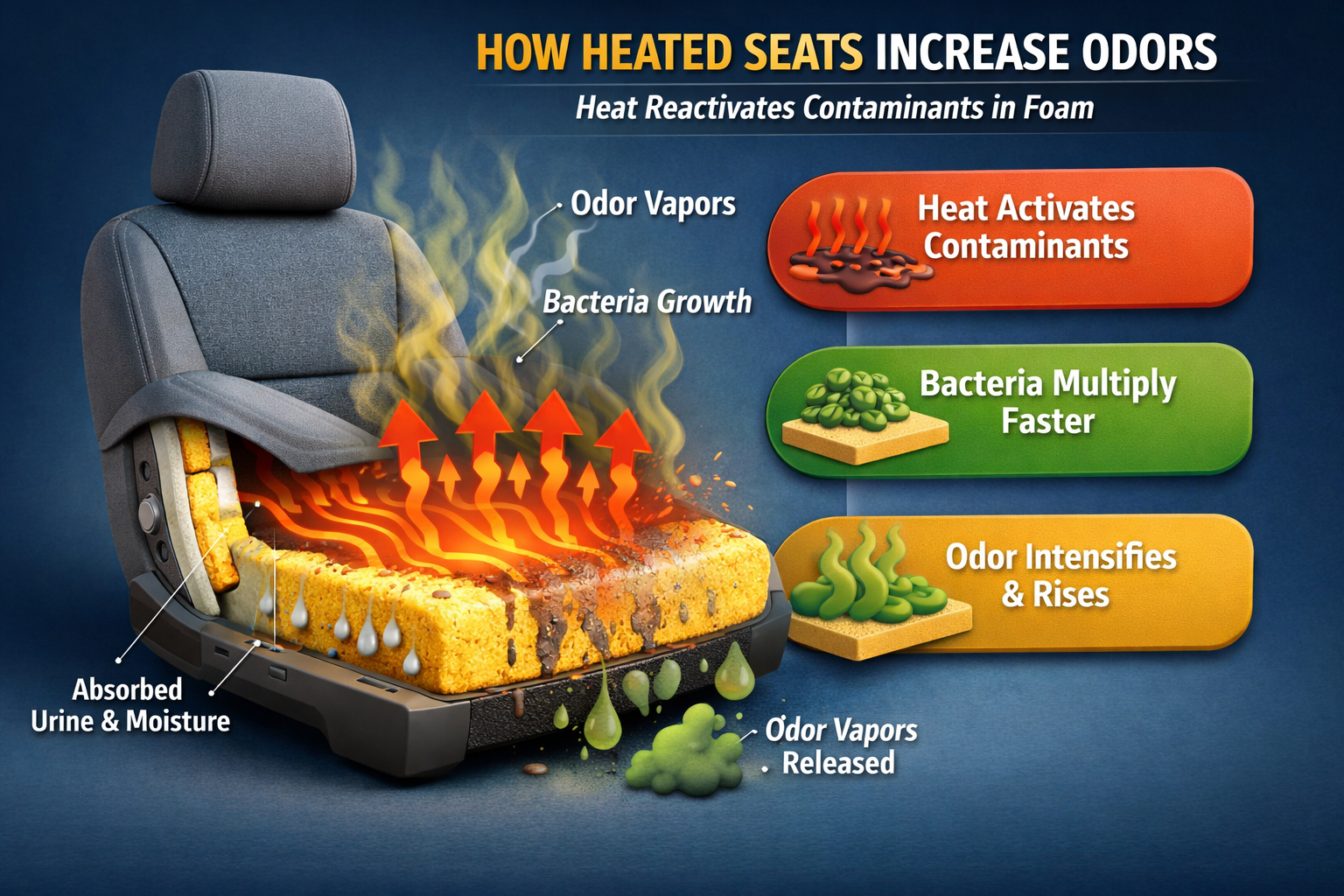
3D cross-section illustration of a heated vehicle seat showing how heat intensifies odors trapped in seat foam during professional car odor removal and urine smell removal car assessments. The image reveals absorbed urine and moisture deep inside the foam and padding. When the heated seat is activated, thermal energy reactivates contaminants, accelerates bacterial growth, and forces odor vapors upward through the fabric. Arrows and visual indicators demonstrate how heat causes odors to intensify and spread throughout the vehicle cabin, explaining why urine smells often worsen when seats warm up and why surface-level detailing cannot fully resolve deep interior contamination.
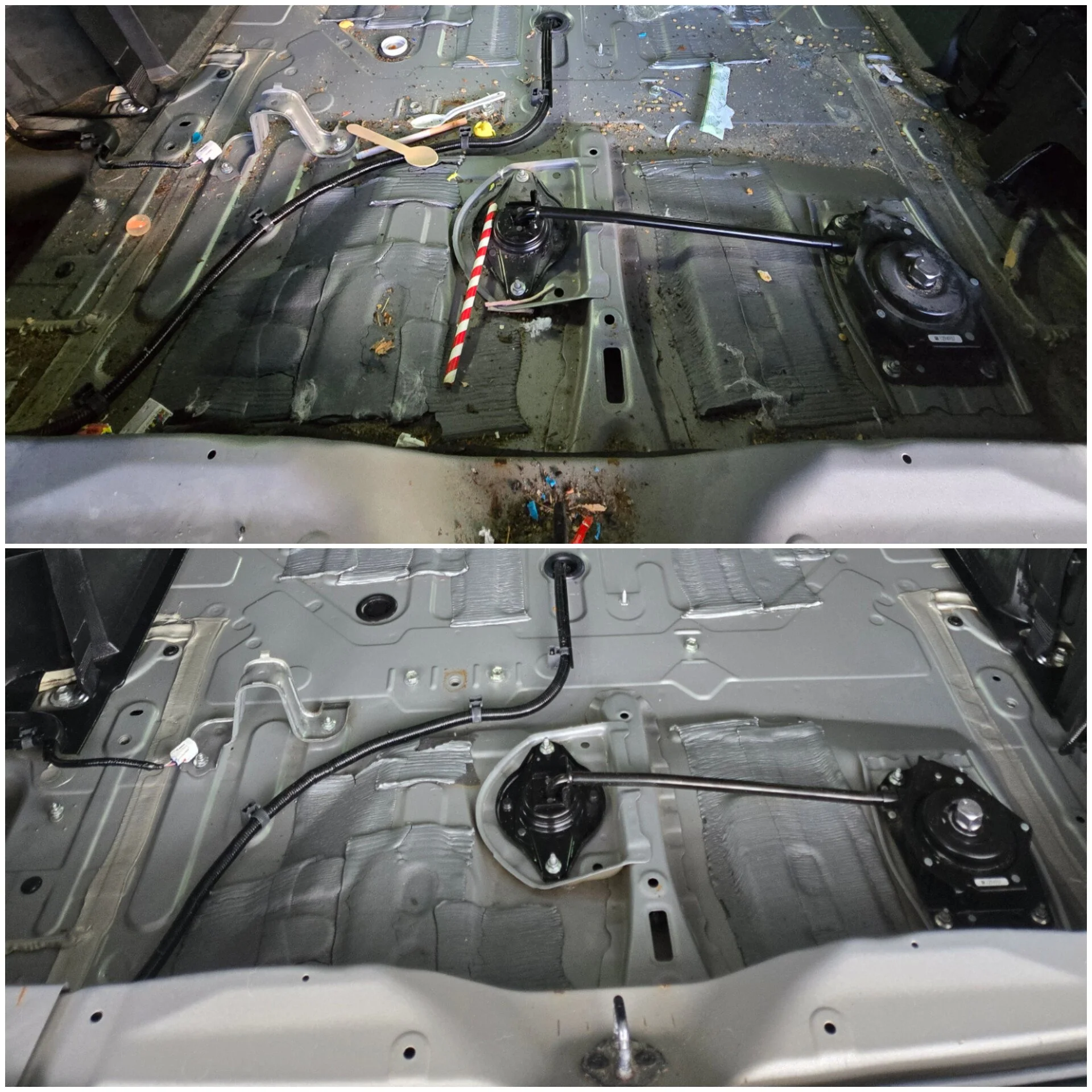
Mouse Infestation in a Vehicle: Contamination, Damage and Remediation
Mouse droppings inside a vehicle are classified as a biohazard and are a common sign of a mouse infestation in a car due to the potential presence of harmful pathogens such as hantavirus, leptospira, and salmonella. This article explains the health risks associated with mouse contamination, why DIY cleaning is unsafe, and when professional vehicle remediation is required to safely restore a contaminated interior.
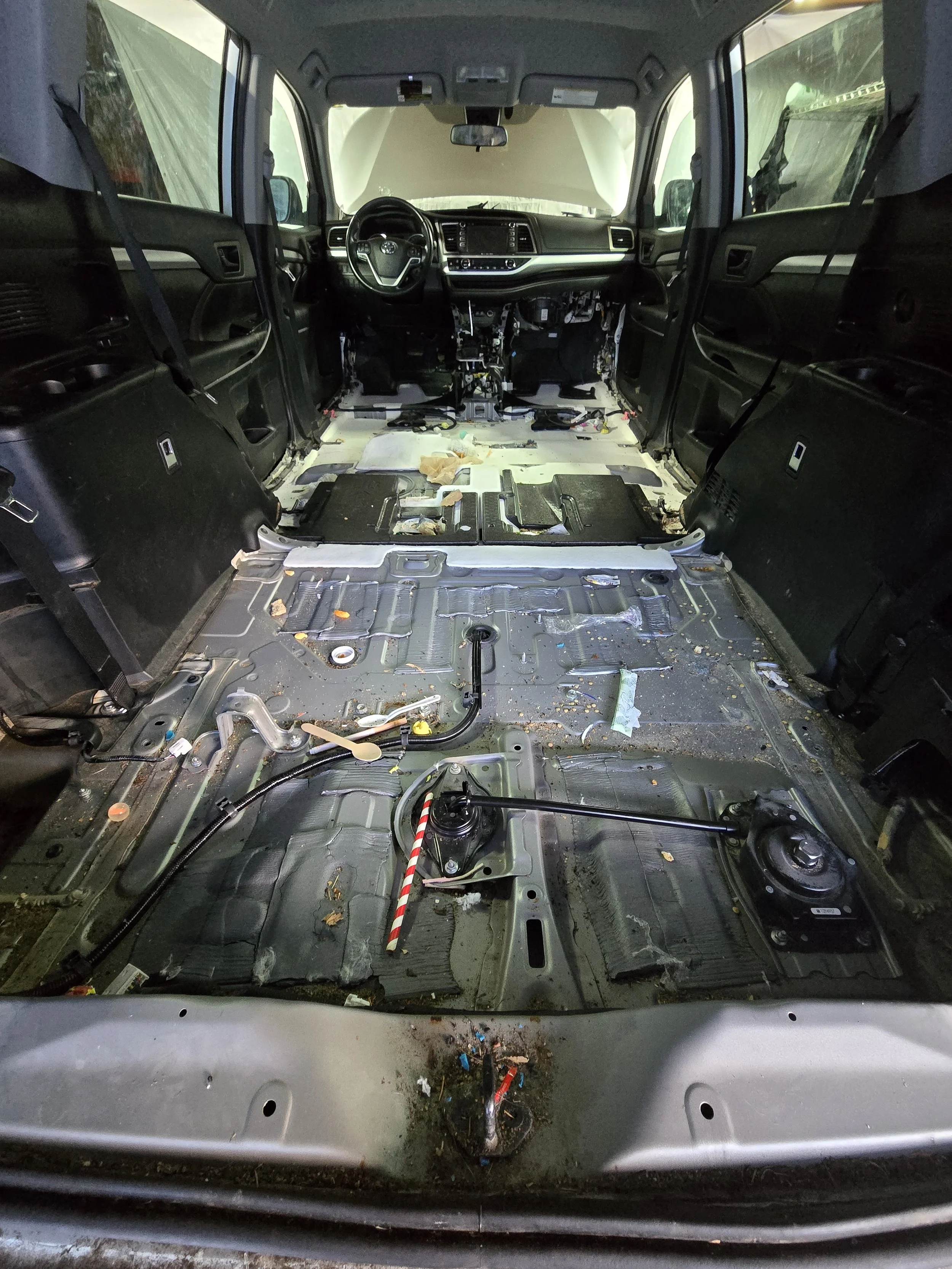
Severely gutted car interior showing extensive mouse infestation with contaminated insulation, exposed wiring, and nesting debris
Mouse Infestation in a Vehicle: Contamination, Damage and Remediation
Finding mouse droppings, urine, nesting material or damaged insulation inside a vehicle can indicate contamination extending beyond the immediately visible area.
Rodents may travel beneath seats, carpet and trim; enter storage compartments; collect nesting material inside concealed cavities; or gain access to areas surrounding the heating, ventilation and air-conditioning system. They may also chew wiring, insulation and other vehicle components.
The appropriate response depends on what was found, where the activity occurred, how widespread it appears to be and which interior materials may have been affected.
Cotton Soft Detailing provides inspection-led mouse and rodent infestation vehicle remediation in Edmonton. Our work focuses on assessing the affected interior, creating appropriate access, removing accessible contamination, treating affected materials and documenting the conditions found throughout the project.
Common Signs of Mouse Activity Inside a Vehicle
Evidence of rodent activity may include:
Droppings beneath seats, inside storage compartments or around the spare-tire area
Urine staining or a persistent ammonia-like odour
Shredded insulation, paper, fabric or other nesting material
Food debris stored in concealed areas
Chewed wiring, insulation or interior materials
Unusual debris around cabin air filters or ventilation openings
Scratching or movement sounds when the vehicle is stationary
Odours that become more noticeable when the vehicle warms up or the HVAC system operates
One visible dropping or nest does not establish the full extent of the condition. Rodents can move through narrow openings and leave contamination in areas that cannot be properly inspected while the interior remains assembled.
Why Rodent Contamination Requires Careful Handling
Rodent droppings, urine and nesting material should be handled carefully. When dried biological material is disturbed, fine particles can become airborne or transfer to surrounding surfaces.
The presence of rodent waste does not by itself confirm that a specific pathogen is present. However, the contamination may justify controlled handling because its biological contents cannot be determined visually.
Rodent activity may affect:
Carpet and carpet underlay
Seat fabric and cushioning
Floor insulation and sound-deadening materials
Trunk and spare-tire compartments
Interior trim and concealed cavities
Cabin air filters and accessible HVAC areas
Wiring routes and electrical components
Rodents can also chew wiring or other vehicle components. Cotton Soft Detailing documents visible conditions encountered during the remediation process, but electrical diagnosis and mechanical repairs must be completed by an appropriate automotive professional.
Why Uncontrolled Cleanup Can Increase Exposure
Cleanup methods that aggressively disturb dry waste may spread particles beyond the original area. Household vacuums, compressed air and uncontrolled brushing can move debris into the air or surrounding interior materials.
The appropriate cleanup method depends on the amount and location of contamination, the materials affected and whether rodent activity extends into concealed areas.
Limited contamination on an accessible, non-porous surface is different from contamination found:
Beneath installed carpet
Inside carpet underlay or insulation
Within seat cushioning
Behind interior trim
Near ventilation components
Throughout multiple areas of the vehicle
Removing visible droppings or temporarily reducing odour does not establish that concealed contamination has been addressed.
Why Vehicle Interiors Require Careful Assessment
Vehicle interiors contain porous materials, confined spaces and ventilation pathways through which debris or odour may move. Contamination located near air intakes, ducting, carpet edges or installed components may not be fully visible during a surface inspection.
An inspection helps determine:
Where rodent evidence has been observed
Whether activity appears isolated or widespread
Which porous and non-porous materials may be affected
Whether contamination may extend beneath installed components
Whether professional mechanical access is required
Whether affected materials appear suitable for remediation or replacement
Whether additional automotive inspection is recommended
The service scope should follow the vehicle’s actual condition rather than a predetermined detailing package.
Our Rodent Contamination Remediation Process
Every project is adapted to the conditions found inside the vehicle. The approved scope may include the following stages.
1. Initial Information and Condition Assessment
We review the customer’s photographs, description of the rodent activity, known affected areas, odours, cleaning already attempted and any concerns involving the HVAC system or electrical components.
A preliminary estimate may be provided using the information available before service. The full extent of contamination may not be known until concealed areas become accessible.
2. Pre-Service Documentation
Before remediation begins, the vehicle’s condition is documented. Depending on the scope, records may include photographs, video, visible rodent evidence, affected areas, pre-existing damage and other relevant observations.
Documentation creates a record of what was visible before work and what was later discovered during approved access.
3. Controlled Removal of Accessible Debris
Accessible droppings, nesting material and contaminated debris are removed using controlled methods intended to limit unnecessary disturbance and transfer.
The methods used depend on the condition of the debris, affected materials and accessibility of the contaminated area.
4. Professional Mechanical Access When Required
If seats, carpet, consoles, trim or other vehicle components must be removed to inspect or reach affected areas, the applicable regulated mechanical removal and reinstallation are performed by a qualified automotive technician through a third-party AMVIC-licensed automotive repair business.
Cotton Soft Detailing performs the interior cleaning and remediation portions of the approved scope.
Mechanical access is recommended only when the affected area cannot be reliably inspected or treated with the interior fully assembled.
5. Concealed-Area Inspection
Once approved access has been created, previously concealed areas can be inspected and documented.
This may reveal:
Additional droppings or nesting material
Urine staining or absorbed contamination
Contaminated carpet underlay or insulation
Material deterioration
Chewed wiring or damaged components
Rodent activity near ventilation pathways
Areas requiring further access or replacement materials
If the findings materially change the recommended scope, they are communicated before work outside the existing authorization proceeds.
6. Cleaning, Remediation and Material Assessment
Accessible affected surfaces are treated according to their material type and observed condition.
The approved remediation scope may include:
Removal of accessible biological debris
Cleaning of affected non-porous surfaces
Treatment of restorable porous materials
Appropriate disinfection or sanitization procedures where applicable
Controlled treatment of affected carpet, upholstery or underlay
Cleaning of accessible areas surrounding wiring routes or installed components
Controlled drying following moisture-based treatment
Reassessment before reassembly
A process appropriate for a hard surface may not be appropriate for carpet, insulation, seat foam or another porous material.
When Material Replacement May Be Recommended
Remediation does not automatically mean every affected component must be replaced. Salvageable materials may be retained and treated where a reasonable restoration outcome appears possible.
Replacement may be recommended when:
Contamination has deeply saturated a porous material
Nesting material is embedded within insulation
A material has deteriorated or cannot be reliably accessed
Urine or odour remains trapped within internal layers
Cleaning and drying cannot be completed reliably
Continued treatment could damage the material
The condition of the component prevents a dependable restoration outcome
Replacement decisions are based on the material’s condition, accessibility and construction rather than appearance alone.
Rodent Activity Near the HVAC System
Evidence around the cabin air filter, air intake or ventilation system may require additional evaluation.
Accessible HVAC areas may be inspected and cleaned when they fall within the approved scope. However, some ducting, heater-box components and enclosed ventilation areas may not be reasonably accessible without extensive mechanical procedures.
Cotton Soft Detailing does not diagnose or repair HVAC systems. If damage, contamination or nesting is suspected inside inaccessible mechanical components, further evaluation by an appropriate automotive repair professional may be recommended.
Wiring and Electrical Damage
Rodents sometimes chew wiring, insulation, connectors or other vehicle components.
Cotton Soft Detailing may photograph and document visible damage encountered during approved interior access, but we do not diagnose electrical faults or perform mechanical repairs.
Visible or suspected wiring damage should be assessed by a qualified automotive professional before the vehicle is relied upon for normal operation.
Documentation Throughout the Project
Depending on the approved scope, documentation may include:
Pre-service condition records
Before, during and after photographs or video
Visible droppings, nesting material and urine staining
Concealed findings discovered after approved access
Materials treated or recommended for replacement
Visible wiring or component damage
Authorized changes to the service scope
Work performed within the approved remediation scope
Final condition and quality-control records
For insurance-related projects, this documentation can help provide the vehicle owner and insurer with a clearer record of the observed condition and work performed.
Insurance coverage, authorization and reimbursement decisions remain with the applicable insurer or adjuster.
Results and Important Limitations
Rodent remediation is intended to reduce accessible contamination within the approved scope. Results depend on:
The extent and duration of the infestation
Areas travelled by the rodents
Materials affected
Depth of urine or biological absorption
Accessibility of concealed areas
Damage that occurred before service
Whether contaminated components are approved for replacement
Whether an active infestation has been addressed
Vehicle construction includes seams, enclosed structural cavities, ventilation components, wiring channels and other areas that may not be safely or reasonably accessible without destructive procedures or extensive vehicle reconstruction.
For that reason, Cotton Soft Detailing does not guarantee complete contamination or odour removal from every inaccessible area. We also cannot prevent a new infestation after the vehicle leaves our care.
Any continuing rodent activity should be addressed before interior remediation is considered complete.
Pricing and What to Expect
Rodent and mouse infestation remediation is priced according to the vehicle’s condition, extent of contamination, affected materials and access requirements.
The estimate may account for:
Protective equipment and containment measures
Controlled debris removal
Interior remediation labour
Professional mechanical disassembly and reassembly
Filtration practices
Disposal requirements
Documentation
Drying and reassessment
Materials or components requiring replacement
Additional automotive or specialty services
A deposit, investigative-disassembly payment or other prepayment may be required depending on the approved scope. Any payment requirements are explained before the vehicle is scheduled or work proceeds.
Service time also varies. Projects involving extensive mechanical access, controlled drying, replacement materials or vehicle-specific parts may require several days or longer. Parts availability and third-party scheduling can extend the timeline.
When to Request a Professional Assessment
Consider requesting an assessment when:
Droppings or nesting material appear in multiple areas
Urine odour persists after visible debris is removed
Contamination is found beneath seats or carpet
Rodent activity is suspected near the HVAC system
Interior insulation or other porous materials are affected
Wiring or vehicle components appear damaged
The visible evidence suggests contamination may extend into concealed areas
An insurance claim requires photographs, estimates or service documentation
You do not need to determine the required service yourself. Describe what you found, where it was located, whether the vehicle has been cleaned and whether any unusual odours, sounds or warning lights are present.
Request a Rodent Contamination Assessment
If your vehicle has been affected by mice or other rodents, submit a quote request with photographs and a description of the areas involved.
Include any available information about:
Where droppings or nesting material were found
Whether urine or ammonia-like odour is present
Whether the cabin air filter has been inspected
Whether wiring or insulation appears damaged
How long the activity may have been occurring
Any cleaning or repairs already attempted
Whether an insurance claim has been opened
We will review the information provided, determine whether the condition appears to fall within our service scope and recommend the appropriate next step.