
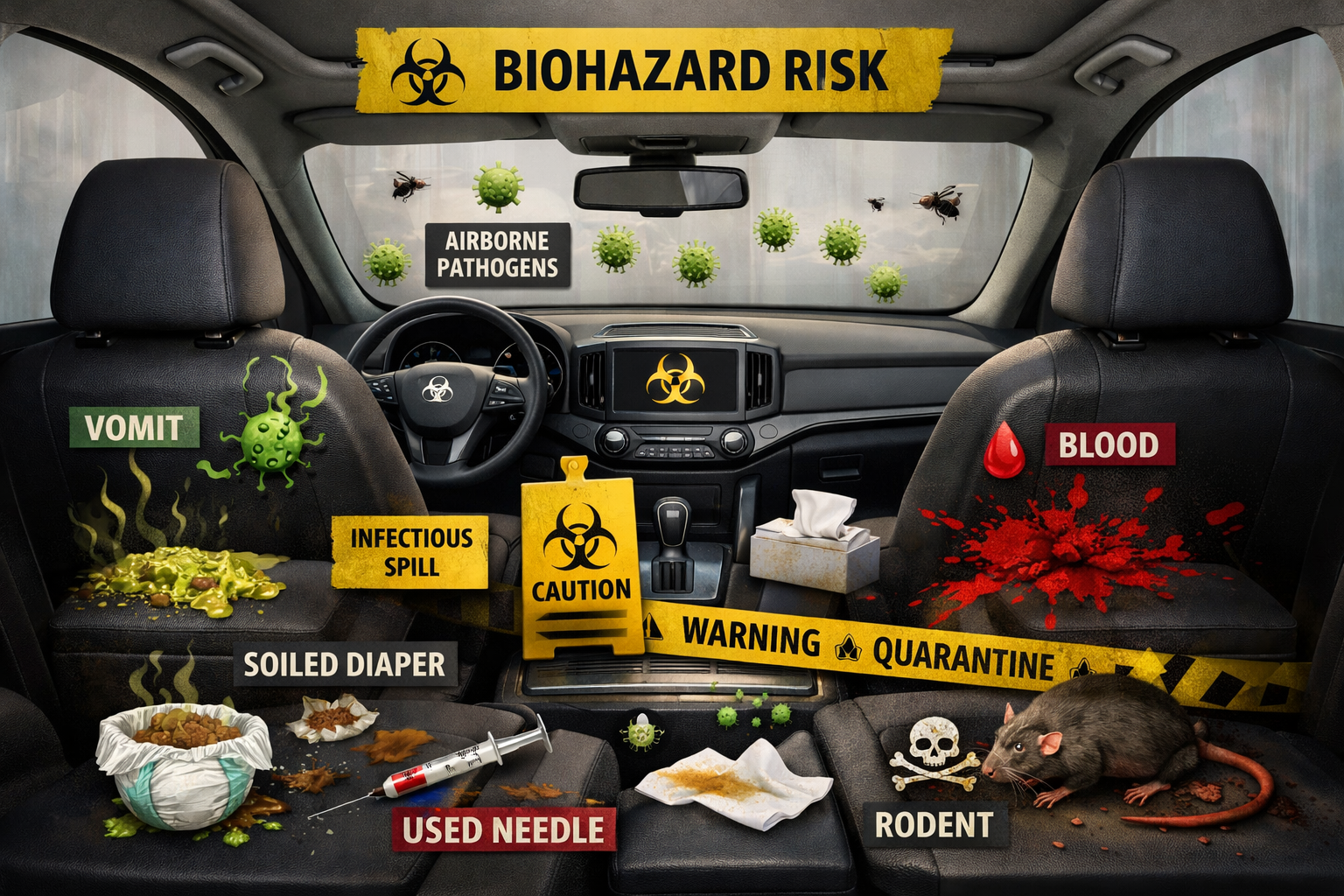
Vehicle Biohazard & Interior Remediation in Edmonton
Cotton Soft Detailing provides inspection-led interior remediation for vehicles affected by biological contamination, hazardous spills, water intrusion and other conditions requiring specialized cleaning beyond conventional interior detailing.
Each service begins by evaluating the contamination type, affected materials, migration and accessibility. Cleaning chemistry, PPE, contamination controls and restoration methods are selected according to the specific hazard and vehicle condition rather than a standardized cleaning package.
Where contamination has migrated beneath installed components or into concealed materials, additional access or professional disassembly may be required before the affected area can be properly evaluated.
This is not a maintenance detail. Biohazard and disaster remediation is condition-based, requires inspection before the final service scope is established, and results vary according to the contamination involved, affected materials and accessibility.
Vehicle Interior Contamination We Handle
Vehicle contamination can involve biological material, hazardous substances, moisture or organic matter that has migrated beyond the visibly affected area. The appropriate remediation process depends on the source, affected materials, extent of migration and accessibility.
Our interior remediation services include:
Rodent & Mouse Infestation Contamination
Urine, feces, nesting material and contamination associated with rodent activity.Human/Animal Bodily Fluid & Biological Contamination
Accepted human or animal bodily fluids and biological waste requiring controlled cleaning and remediation.Water Intrusion, Flooding, Mold & Mildew
Vehicle interiors affected by water entry, retained moisture or resulting microbial growth.Chemical Spill Contamination
Chemical spills requiring substance-specific assessment, material evaluation and controlled remediation.Hazardous Organic Spills
Organic liquids or materials that can create significant contamination, persistent odour or deterioration when absorbed into vehicle interior materials.
Each condition is assessed individually. Not every contaminated vehicle requires the same level of disassembly, material removal or remediation.
Contamination-Specific Assessment & Remediation
Effective vehicle remediation begins with identifying what the contamination is, where it has travelled and which materials have been affected. A single chemical or cleaning procedure is not appropriate for every contamination type or interior material.
The remediation approach is developed according to factors including:
The known or suspected contaminant
Potential health or material hazards associated with the substance
Porous and non-porous materials affected
The extent and direction of contamination migration
Whether liquid or contamination has entered carpet, underlay, seat materials or concealed areas
Material compatibility with the required cleaning chemistry
Appropriate dwell time, agitation, extraction or removal methods
Drying requirements and the condition of affected materials
Whether contaminated materials can be reliably restored or should be considered for replacement
Where appropriate, available product information and hazard documentation may also be reviewed to help determine handling requirements and material considerations.
The objective is not simply to make the interior look or smell clean. The remediation scope is based on the contamination identified, the areas that can be reliably accessed and what can reasonably be restored.
Controlled Remediation & Cross-Contamination Prevention
When the contamination involved requires additional controls, the work area and remediation process are adapted to reduce unnecessary spread to previously unaffected surfaces, tools and surrounding areas.
Depending on the identified hazard and approved scope, controls may include:
Contamination-specific personal protective equipment (PPE)
Separation of contaminated and clean tools or materials
Controlled handling and removal of contaminated debris
Dedicated cleaning procedures for affected tools and equipment
Surface disinfection or sanitization where appropriate for the identified contamination and material
Controlled treatment of porous and non-porous interior materials
Measures to reduce cross-contamination between affected and unaffected areas
Appropriate containment and disposal of contaminated consumables
Documentation throughout the remediation process
The level of control is determined by the type and severity of contamination. Not every vehicle requires the same PPE, containment measures or remediation procedure.
Concealed Contamination & Material Assessment
Vehicle interiors contain layered and concealed materials. Liquid and other contaminants may migrate beneath carpet, into underlay, around seat mounting points, beneath trim or into other areas that cannot be reliably evaluated from the visible surface alone.
When inspection indicates that contamination may extend into inaccessible areas, additional access may be required to establish the appropriate remediation scope. Where mechanical disassembly is required, applicable removal and reinstallation are performed by a qualified automotive technician through a third-party AMVIC-licensed automotive repair business.
Learn more about Signature Interior Restoration with Professional Disassembly.
Once affected areas are accessible, materials are evaluated individually. Depending on the contamination involved and the condition of the material, the appropriate response may include:
Controlled cleaning or remediation of accessible surfaces
Treatment and drying of affected materials where appropriate
Further investigation of contamination migration
Removal of contaminated disposable materials
Recommendation for replacement where porous or damaged materials cannot be reliably restored
Documentation of concealed conditions identified during the service
Professional disassembly creates access for inspection and remediation; it does not guarantee that every contaminated material can be restored.
Remediation Documentation & Insurance Support
Biohazard and interior remediation services are documented from initial intake through final vehicle release. This creates a record of the vehicle’s observed condition, authorized scope, relevant findings and work performed.
Depending on the service, documentation may include:
Pre-service condition inspection
Before, during and after photo or video documentation
Identification of visible contamination and affected areas
Documentation of concealed conditions discovered during approved access or disassembly
Service progression and relevant remediation findings
Customer authorization for changes to the approved scope
Identification of materials recommended for replacement when restoration is not appropriate
Final quality-control and vehicle release documentation
When an insurance claim is involved, available service records can also support communication regarding the observed vehicle condition, recommended scope and work performed.
Documentation does not determine insurance coverage or guarantee claim approval. Coverage decisions remain with the vehicle owner’s insurer or adjuster.
When Vehicle Interior Remediation Is Appropriate
Vehicle interior remediation is intended for contamination events requiring a more controlled, condition-specific process than conventional interior cleaning or detailing.
This may include vehicles affected by:
Rodent or mouse contamination
Accepted human or animal bodily fluids and biological waste
Water intrusion, flooding, mold or mildew
Chemical spills that fall within our accepted service scope
Hazardous organic spills that have absorbed into interior materials
Contamination that may have migrated beneath installed components or into concealed materials
Service Limitations
Not every hazardous material or contamination event can be accepted. Cotton Soft Detailing does not provide remediation for:
Human remains or decomposition-related contamination
Illicit drug production, drug residue or associated contamination
Asbestos or asbestos-containing materials
Contamination requiring licensing, certification, disposal procedures or environmental controls outside our authorized service scope
Other substances may require review before a vehicle can be accepted. When the contaminant is known, customers should identify the substance when requesting a quote and provide available product or safety information where applicable.
This Is Not a Maintenance Detail
These services are not intended for lightly soiled vehicles, routine maintenance cleaning or customers seeking a basic or budget detailing package.
Remediation services are condition-based and require inspection before the final service scope is established. Results vary according to the contaminant involved, severity and extent of migration, affected materials, pre-existing condition and whether contaminated areas can be safely and reliably accessed.
Our Vehicle Interior Remediation Process
Every remediation project is condition-specific, but the overall service follows a controlled process from initial assessment through final release.
1. Initial Contamination Review
Information provided with the service request is reviewed to identify the known or suspected contaminant, affected areas, vehicle condition and potential scope.
2. Inspection & Scope Assessment
The vehicle is inspected to evaluate visible contamination, affected materials, evidence of migration and whether concealed areas may require additional access.
3. Authorization & Documentation
The proposed scope is documented and authorized before service begins. Pre-service condition records and applicable photo or video documentation are established.
4. Access & Further Assessment
Where mechanical disassembly is required, applicable removal and reinstallation are performed by a qualified automotive technician through a third-party AMVIC-licensed automotive repair business. Newly exposed areas are inspected and documented before the remediation scope proceeds or is adjusted.
5. Contamination-Specific Remediation
Affected areas are addressed using cleaning chemistry, PPE, contamination controls and restoration methods appropriate to the identified contaminant, material and condition.
6. Drying, Reassessment & Quality Control
Where moisture-based treatment is involved, affected materials are allowed to dry as required. Treated areas are reassessed and additional work may be performed where the approved scope and material condition require it.
7. Reassembly & Final Release
Where professional disassembly was required, applicable components are reinstalled by a qualified automotive technician through a third-party AMVIC-licensed automotive repair business.. Final documentation and quality-control procedures are completed before vehicle release.
If additional contamination, concealed damage or materials that cannot be reliably restored are identified during the service, the findings are documented and communicated before work proceeds beyond the authorized scope.
Service Time & Process Expectations
Vehicle interior remediation is condition-based, and service time depends on the contamination involved, affected materials and required scope.
Some projects require additional time for professional disassembly, controlled drying, repeated treatment, material replacement or further assessment after concealed areas become accessible.
Before service begins, we provide an estimated scope and expected timeline based on the information available. If additional contamination or damage is discovered during the service, the findings are documented and communicated before work proceeds beyond the authorized scope.
Completion dates are estimated rather than guaranteed because the required remediation process and material response cannot always be fully determined before work begins.
Biohazard Car Cleaning FAQs in Edmonton
What types of vehicle contamination do you handle?
We handle rodent and mouse contamination, accepted human and animal bodily fluids, water intrusion, mold and mildew, hazardous organic spills, and chemical spills that fall within our service scope.
Each vehicle is assessed individually because different contaminants require different procedures.
Is every contaminated vehicle considered a biohazard?
No. Some situations involve biological hazards, while others involve chemicals, water, mold or hazardous organic material.
We identify the type of contamination first and determine the appropriate remediation process from there.
How do you determine what remediation is required?
We assess the contaminant, affected materials, severity, migration and accessibility.
From there, we determine the appropriate cleaning methods, chemistry, PPE, contamination controls and whether additional access is required.
Does my vehicle need to be disassembled?
Not necessarily. Disassembly is recommended only when affected areas cannot be reliably inspected or accessed with the interior assembled.
When mechanical disassembly is required, applicable removal and reinstallation are performed by an AMVIC-licensed mechanic.
Can contaminated carpet, underlay or seat materials always be cleaned?
No. Some materials can be restored, while others may require replacement.
This depends on the contaminant, severity of exposure, material condition and whether the affected area can be reliably accessed and treated.
Can you guarantee all contamination or odour will be removed?
No universal guarantee can be made before the vehicle is assessed.
Results depend on the contaminant, severity, affected materials and accessibility. If a source or material cannot be reliably restored, additional access or replacement may be recommended.
Do you provide documentation for insurance claims?
Yes. Services may include condition records, service documentation, and before, during and after photos or videos.
These records can support an insurance claim, but coverage and claim approval are determined by the insurer.
What types of hazardous contamination do you not accept?
We do not provide remediation for human remains or decomposition, illicit drug contamination, asbestos, or hazards requiring licensing or controls outside our authorized service scope.
Other substances may require review before we can accept the vehicle.
How is remediation different from interior detailing?
Interior detailing primarily addresses the cleanliness and appearance of accessible surfaces.
Remediation focuses on the source, affected materials, contamination migration and concealed areas. It may require specialized PPE, contamination controls, professional disassembly or material replacement.
This is not a maintenance detail.
How do I request an assessment in Edmonton?
Submit a quote request explaining what happened, what substance or contamination is involved, and which areas of the vehicle were affected.
Include photos and product information when available. We will review the information and recommend the appropriate next step.
Request Vehicle Interior Remediation
If your vehicle has been affected by biological contamination, water intrusion, mold, a hazardous spill or another serious interior contamination event, submit a service request with information about what happened and the areas affected.
We will review the information provided, determine whether the condition falls within our service scope and recommend the appropriate next step.
Final service scope and pricing are condition-based and determined through assessment and inspection.