

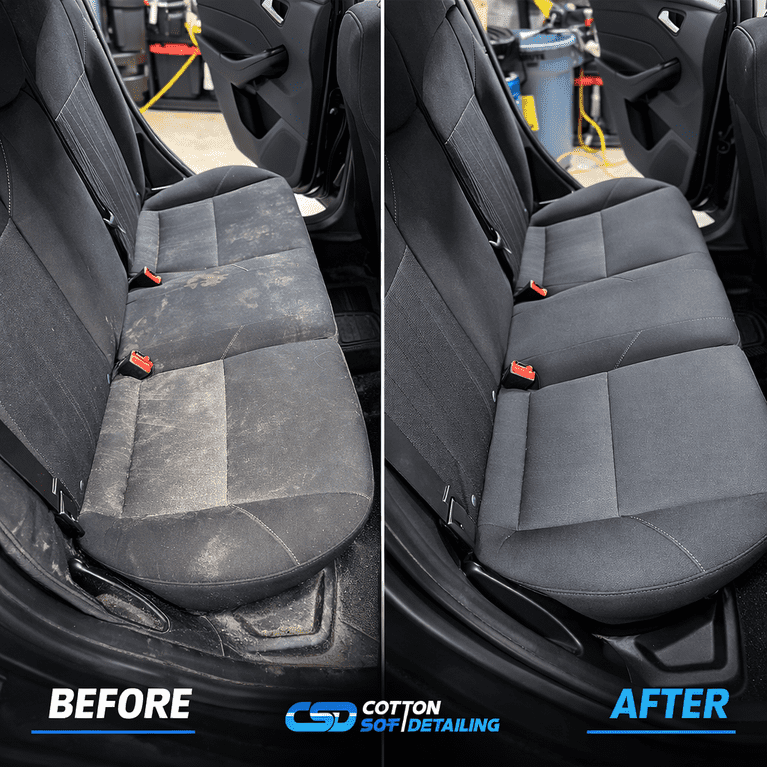
Car Seat Cleaning Edmonton
Vehicle seats absorb more contamination than any other interior surface.
Where Seat Contamination Actually Exists
Odours and staining rarely originate from the surface alone.
They develop within the internal structure of the seat.
Seat Foam
Seat foam is highly absorbent.
Liquids and organic materials pass through the upholstery and become trapped inside the foam, where they:
Remain protected from surface cleaning
Reactivate with heat and humidity
Continue producing odours over time
Stitching & Seams
Seams and tight stitching areas collect:
Oils
Debris
Moisture
These areas are difficult to fully clean and often contribute to lingering odours.
Repeated Exposure Over Time
Even small spills or daily use can gradually build contamination within seat materials.
This accumulation is often unnoticed until odours or staining become significant.
Why Seat Cleaning Is Often Misunderstood
Most “car seat cleaning” services focus only on visible surfaces.
However, vehicle seats are constructed using layered materials that allow contamination to travel beneath the upholstery.
This means:
The surface can appear clean
While contamination remains inside the seat
This is why odours return — and why results from basic cleaning are often temporary.
Common Seat Contamination Issues
Food and beverage spills absorbed into foam
Body oils and sweat buildup in high-contact areas
Pet hair, dander, and biological residue
Moisture intrusion leading to staining
Odour retention within seat padding and stitching
Once contamination reaches the foam layer, surface cleaning alone is not enough.
Why Basic Cleaning Methods Fail
Most attempts at seat cleaning involve:
Light shampooing
Surface extraction
Fragrance or odour masking
These methods do not address:
Contamination inside foam
Residue beneath the surface
Odour sources within seat structure
As a result, odours often return after cleaning.
How Proper Seat Cleaning Works
Effective seat cleaning requires more than just technique — it requires correct material identification, controlled processes, and precise chemical selection.
Inspection
Identifying:
Material type (fabric, synthetic, leather)
Contamination level
Saturation depth
This determines what cleaning methods and chemicals can be safely and effectively used.
Targeted Cleaning
Using methods designed to:
Flush contaminants from upholstery
Break down embedded residue
Minimize over-saturation
Cleaning is adjusted based on both material sensitivity and contamination type.
Foam-Level Treatment
Where required, treatment extends beyond the surface into the seat foam and underlying materials, where contamination is often trapped.
This is critical for:
Odour removal
Biological contamination
Long-term results
Chemical Matching (Critical Step)
Most detailing services rely on:
Degreasers
All-purpose cleaners
Retail-strength enzyme products
While these may be effective for light surface cleaning, they are not designed for targeted contamination removal within seat materials.
For higher-level results, chemicals must be matched specifically to the type of contamination, such as:
Organic waste (enzymatic treatment)
Body oils and buildup (specialized surfactants)
Protein-based contamination (targeted breakdown agents)
Unknown or mixed contamination (multi-stage treatment approach)
Using the wrong chemical:
Reduces effectiveness
Leaves residue behind
Can contribute to recurring odours
Proper chemical selection ensures contamination is broken down at the source — not just diluted or masked.
Controlled Drying
After cleaning, proper drying is critical.
Moisture left inside seat foam can:
Reactivate odours
Promote bacterial growth
Lead to long-term material issues
Drying must be controlled to ensure the seat is fully dried internally, not just on the surface.
When Seat Cleaning Alone Is Enough
Seat-focused cleaning may be sufficient when:
Contamination is limited to the seating area
No spread beneath seats
Odours are moderate and localized
When Deeper Interior Cleaning Is Required
In many cases, contamination extends beyond the seat itself.
This may include:
Moisture beneath carpets
Odours originating under seats
Spread into surrounding interior materials
When this occurs, seat cleaning alone will not resolve the issue.
What Level of Cleaning Does Your Vehicle Actually Need?
Not all seat contamination requires the same level of service.
Deep or Persistent Contamination
Odours returning after cleaning
Moisture or contamination beneath seats
Unknown source of odour
👉 Best fit: Signature Interior Restoration
Moderate Seat Contamination
Visible staining
Light to moderate odour
No spread beyond seating area
👉 Best fit: Interior Restoration Cleaning
Biological or Severe Contamination
Urine saturation
Rodent activity
Mold or organic decay
👉 Best fit: Biohazard Interior Remediation
Results & Limitations
Results depend on:
Duration of contamination
Material condition
Depth of saturation
Some conditions may result in:
Permanent staining
Persistent odour due to material damage
In advanced cases, component replacement may be required.
Car seat cleaning in Edmonton requires inspection-led, material-aware cleaning methods to properly address contamination embedded within seat structures.
This is not a cosmetic process — it is a contamination removal process.
Not sure which level your vehicle needs?
Request a quote and we’ll assess your vehicle based on condition and contamination level.