
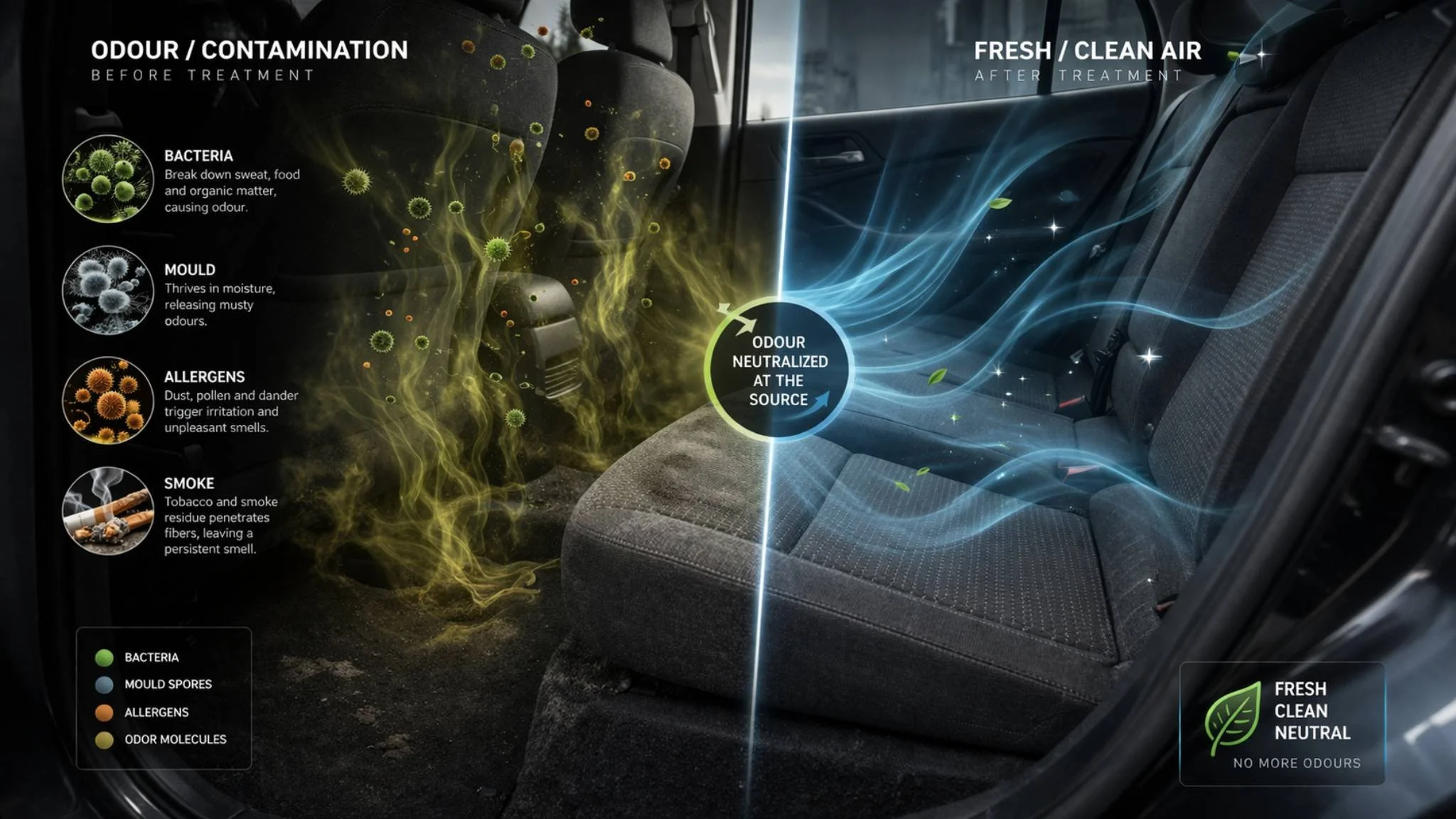
Car Interior Odour Removal in Edmonton
Eliminating Odours at the Source — Not Masking Them
Most persistent odours originate beneath the surface — not from what can be cleaned or reached during standard detailing.
Why Interior Odours Keep Coming Back
Odours return when the source is not physically removed.
Surface cleaning, deodorizing treatments, and scent-based products may temporarily reduce smell, but they do not address contamination embedded beneath the surface.
In many cases, heat, humidity, or regular use will reactivate odour compounds — causing the smell to return.
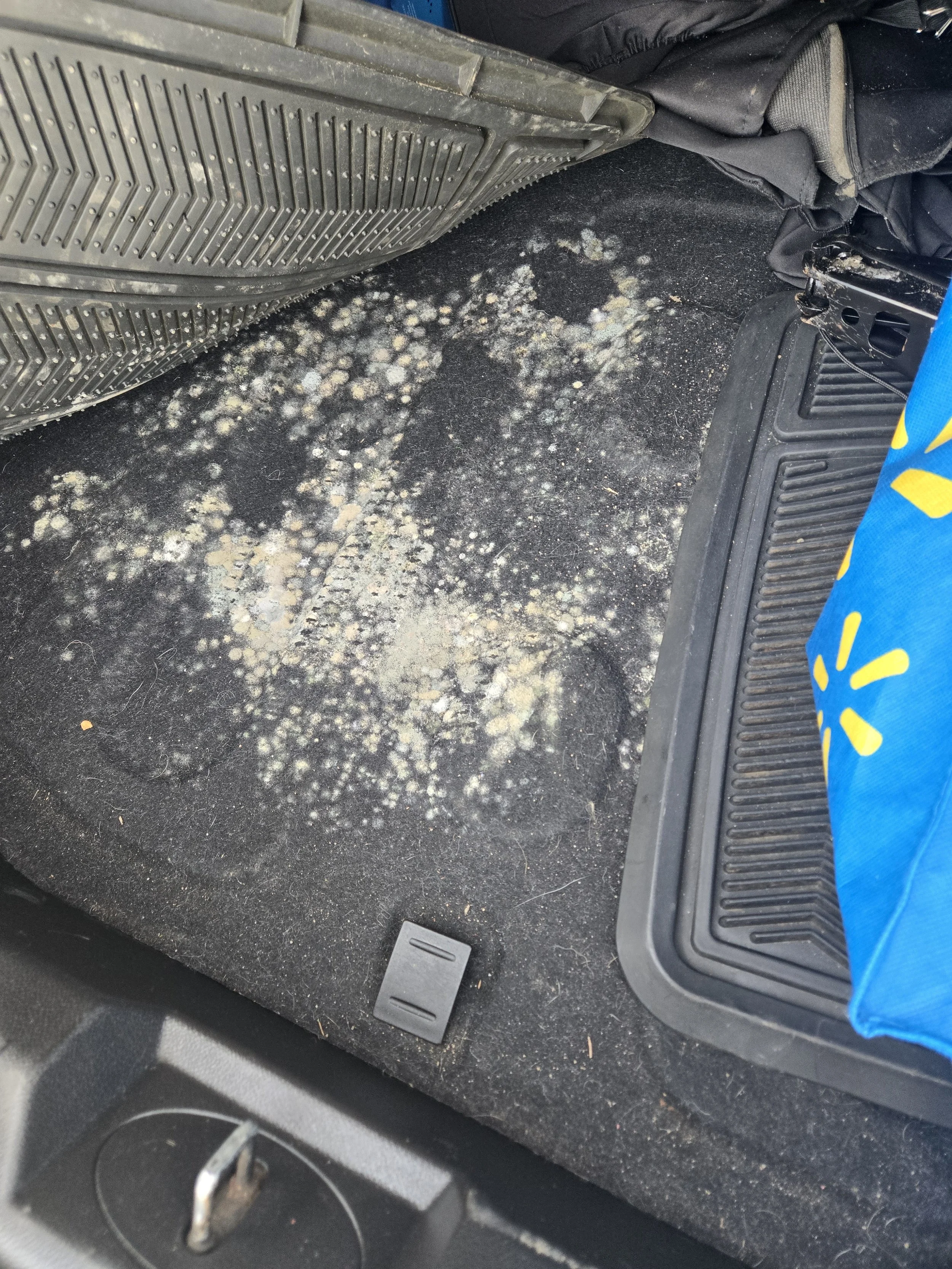
Where Interior Odours Actually Come From
Vehicle interiors are made up of layered materials — and odours don’t stay on the surface.
They typically originate from within the structure of these materials, not what you can see.
Seat Fabric & Foam
Seats are one of the most common sources of odour.
Liquids, oils, and organic matter can pass through upholstery and become trapped inside seat foam, where they remain protected from surface cleaning.
Once inside, these contaminants can:
Produce persistent odours
Reactivate with heat or humidity
Resist standard cleaning methods
Carpet & Underlay
Vehicle carpets are backed by a dense underlayer designed to absorb impact and moisture.
When spills or contamination reach this layer, they can:
Spread beneath the visible carpet
Remain damp for extended periods
Develop bacterial growth or odour over time
Surface cleaning alone does not reach this level.
Seams, Edges & Hidden Channels
Interior seams, tight edges, and structural gaps often collect:
Food debris
Liquid runoff
Organic buildup
These areas are difficult to access without specialized tools or disassembly, allowing odours to persist unnoticed.
Hard-to-Reach Structural Areas
In more advanced cases, contamination can spread into:
Areas beneath seats
Mounting points and brackets
Interior structural cavities
These zones are completely inaccessible during standard interior cleaning and may require partial disassembly to address properly.
Why This Matters
Odours return when the source remains inside the material, even if the surface appears clean.
Proper odour removal requires:
Identifying where contamination exists
Accessing the affected material layers
Removing the source — not masking the smell
Common Causes of Interior Odours
Interior odours are typically linked to:
Food and liquid spills
Pet hair, dander, and biological residue
Moisture buildup and bacterial growth
Smoke contamination embedded in materials
Organic decay (including forgotten items)
Rodent activity and urine contamination
Each of these requires different levels of access and treatment.
Why Surface Treatments Don’t Work
Most odour removal attempts focus on:
Air fresheners
Ozone or scent masking
Light interior cleaning
These methods may temporarily reduce odour, but they do not remove:
Contamination inside seat foam
Residue beneath carpets
Odour sources in hidden areas
As a result, odours return once the vehicle is used again.
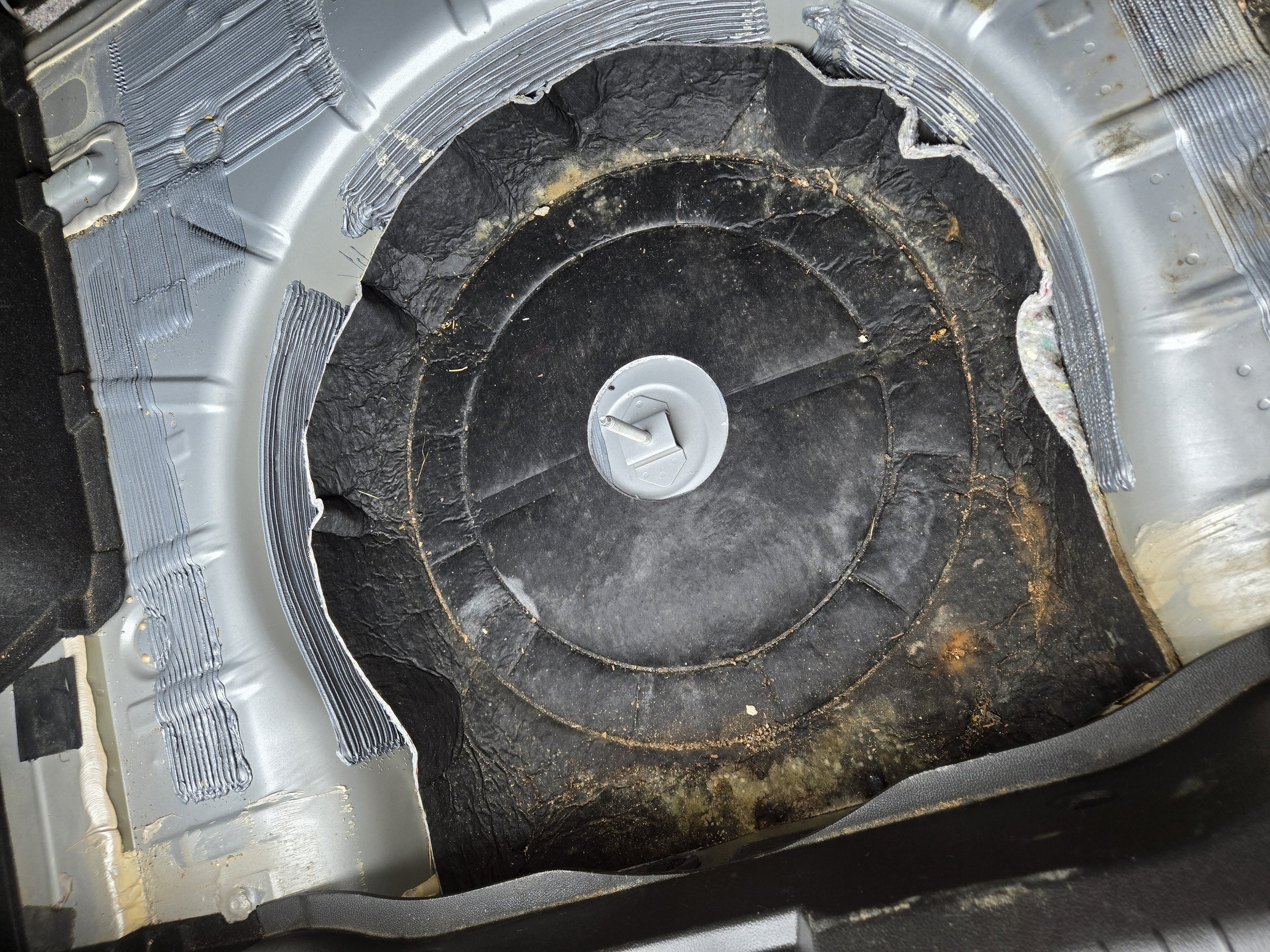
moisture trapped under spare tire, creating mould.
How Proper Odour Removal Works
Identifying the Source
Not all odours come from the same location or material.
Removing Embedded Contamination
Deep cleaning and extraction are required to remove what is causing the odour.
Accessing Hidden Areas
In some cases, contamination exists beneath seats or within interior structures.
Controlled Drying
Improper drying can cause odours to return or worsen.
When Standard Interior Cleaning Is Enough
For normal odour issues:
👉 Interior Restoration Cleaning is typically sufficient
This includes:
Deep extraction
Material-safe cleaning
Odour source reduction
For stronger or persistent odours:
👉 Signature Interior Restoration may be required
This allows for:
Seat removal
Access beneath interior structures
Treatment of contamination at its source
When It Becomes a Biohazard
Some odour sources indicate contamination that requires specialized remediation, including:
Rodent infestations
Urine saturation
Mold or biological growth
Bodily fluids
In these cases, the process shifts to biohazard interior remediation protocols.
This Is Not a Masking Service
Odour removal is not achieved through:
Fragrances
Quick treatments
Surface-only cleaning
It requires identifying and removing the underlying contamination.
Who This Is For
This approach is intended for:
Vehicles with persistent or returning odours
Interiors affected by spills or contamination
Clients seeking long-term results
When This May Not Be Necessary
If your vehicle has:
Very light odour
Recently cleaned interior
No identifiable contamination
A full restoration service may not be required.